
4/22/26:
If you’ve been struggling with anxiety or depression, you may have wondered:
“Do I really need medication?”
“What if I don’t want to rely on meds?”
“Will a psychiatrist just prescribe something right away?”
These are very common concerns — and completely valid.
There’s No One-Size-Fits-All Answer
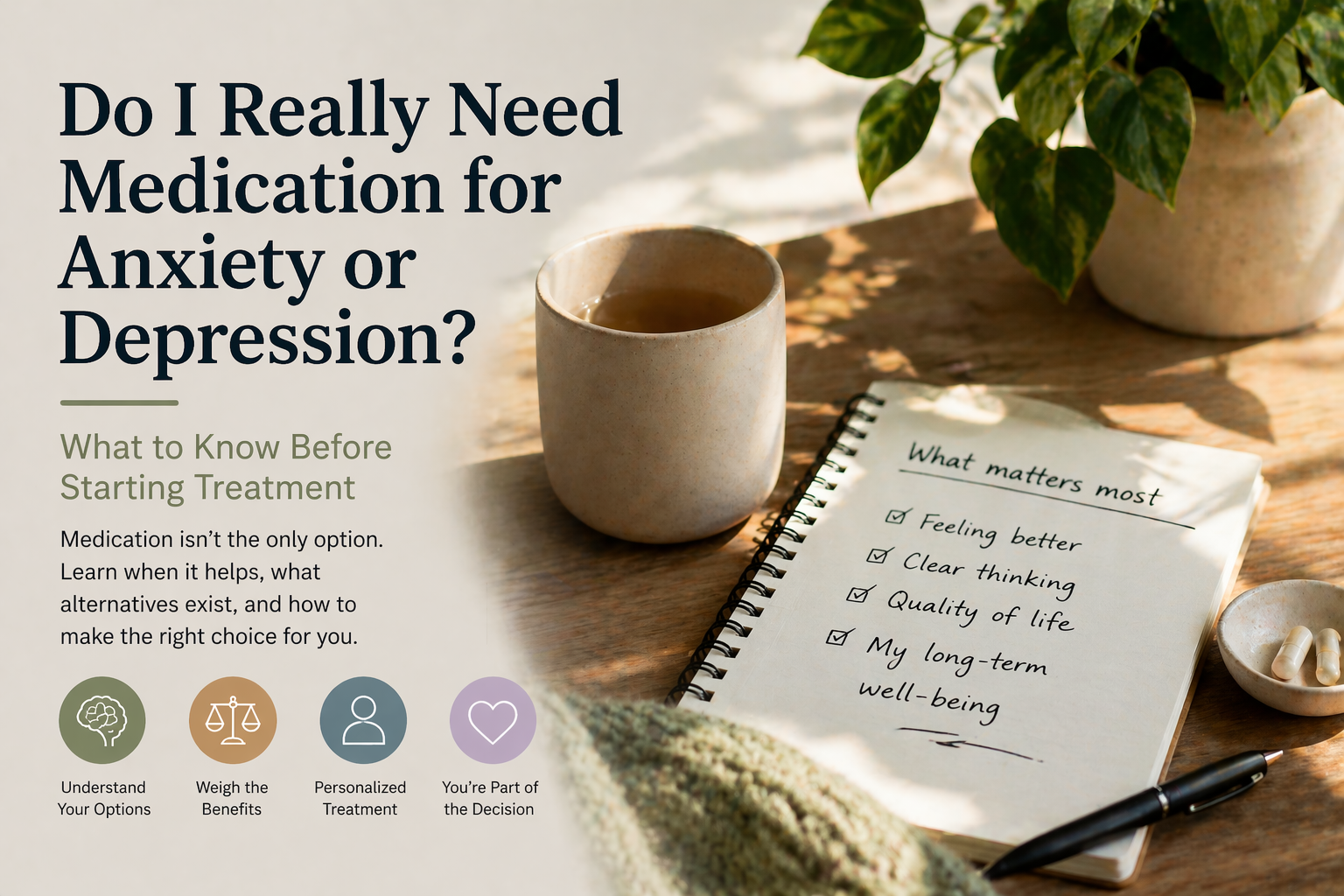
Medication is one option — not the only option.
The right approach depends on:
- the severity of your symptoms
- how long they’ve been present
- how much they’re affecting your daily life
- what you’ve already tried
For some people, medication can make a significant difference. For others, different approaches may be enough.
When Medication May Be Helpful
Medication is often considered when:
- symptoms are persistent or worsening
- anxiety or depression is interfering with daily functioning
- it’s difficult to keep up with work, relationships, or responsibilities
- other approaches haven’t provided enough relief
In these cases, medication can help stabilize mood, reduce anxiety, and create more space to function and think clearly.
When Medication May Not Be Necessary
Not everyone needs medication.
Some people benefit from:
- lifestyle changes (sleep, stress, routine)
- supportive care and coping strategies
- addressing underlying stressors or life transitions
A thoughtful evaluation helps determine what level of support is appropriate.
What About Side Effects or “Being on Medication Long-Term”?
This is one of the most common concerns.
A careful, individualized approach focuses on:
- starting low and adjusting gradually
- monitoring how you actually feel
- minimizing side effects
- avoiding unnecessary medication
The goal is not to put you on medication indefinitely — it’s to help you feel better with the right level of support.
You Are Part of the Decision
One of the biggest misconceptions is:
👉 “If I see a psychiatrist, I’ll be forced to take medication.”
That’s not how it works.
Treatment decisions are:
- collaborative
- based on your comfort level
- guided by your goals
You always have a say in what feels right for you.
A More Balanced Perspective
Medication is simply a tool — not a requirement.
For some, it provides meaningful relief.
For others, it may not be necessary.
The most important step is understanding what’s going on and exploring your options.
When to Consider an Evaluation
You may benefit from speaking with a professional if:
- symptoms are ongoing or worsening
- you feel stuck or unsure what to do next
- you’ve been trying to manage things on your own without improvement
Final Thoughts
If you’ve been wondering whether you need medication, you don’t have to figure that out on your own.
The first step isn’t committing to medication — it’s getting clarity.
👉 If you’re considering treatment for anxiety or depression, a personalized evaluation can help you understand your options and decide what feels right for you.
Book Appointment 732-456-6771