
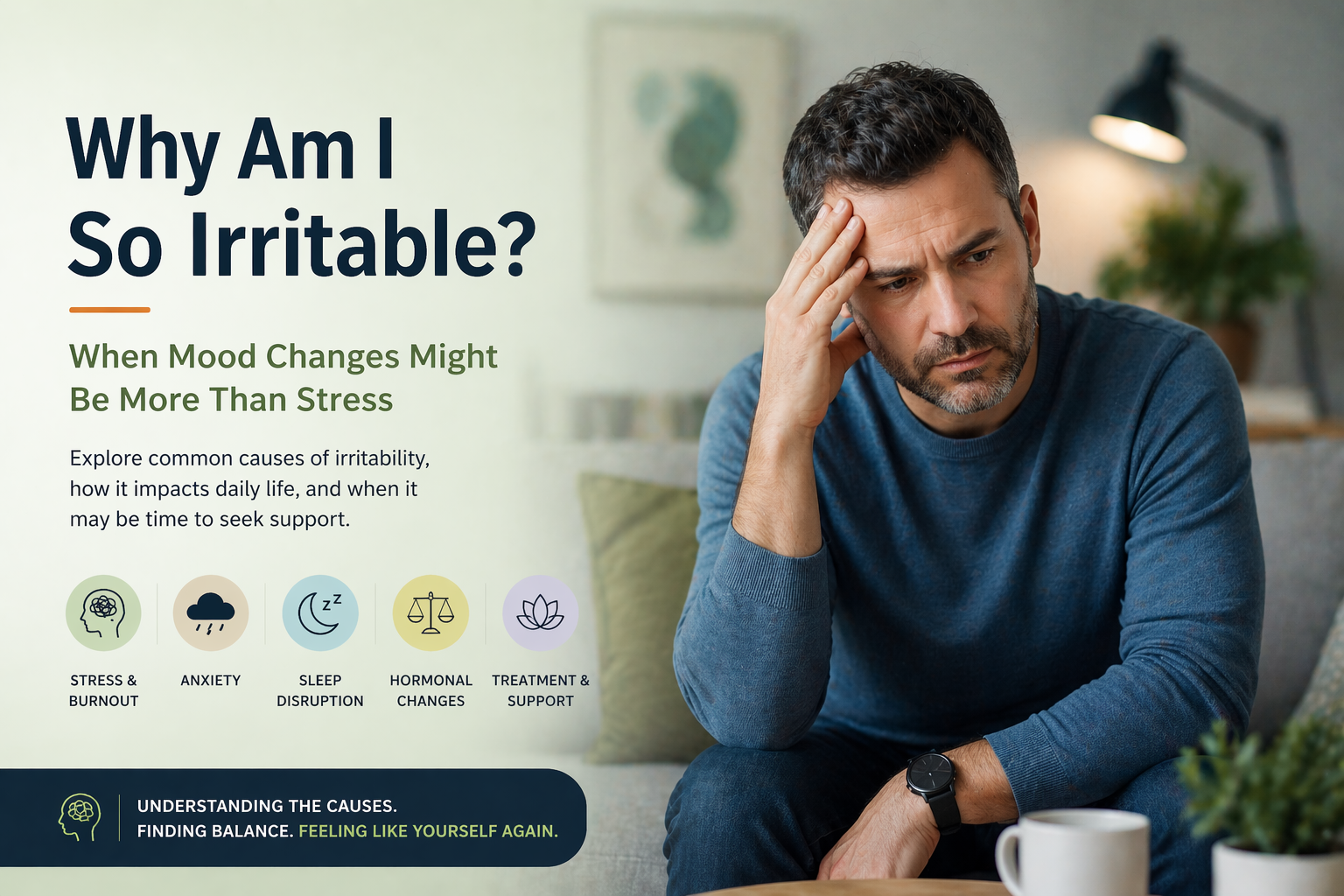
4/19/26: Do you find yourself getting irritated more easily than usual — snapping at small things, feeling on edge, or reacting in ways that don’t feel like “you”?
You’re not alone.
Irritability is one of the most common — and often overlooked — signs that something deeper may be going on.
What Irritability Can Feel Like
Irritability doesn’t always look like anger.
It can feel like:
- being easily frustrated by small things
- feeling constantly “on edge”
- having a short fuse with people you care about
- feeling overwhelmed by everyday responsibilities
- reacting more intensely than you want to
For many people, it’s not about being “angry” — it’s about feeling stretched too thin, mentally and emotionally.
Common Causes of Irritability
Irritability can come from a variety of underlying factors, including:
🧠 Stress and Burnout
When your mind is overloaded, even small tasks can feel overwhelming — making it harder to regulate emotions.
😟 Anxiety
Anxiety doesn’t always show up as worry. It can present as tension, restlessness, or irritability.
🌧 Depression
Low mood can sometimes look like frustration, low patience, or emotional withdrawal rather than sadness.
🌙 Sleep Disruption
Poor or inconsistent sleep can significantly impact mood and emotional regulation.
🌸 Hormonal Changes
Many women experience increased irritability related to hormonal shifts, particularly during the luteal phase of the menstrual cycle or with conditions like Premenstrual Dysphoric Disorder (PMDD).
When Irritability Starts Affecting Daily Life
Occasional irritability is normal.
But it may be time to look deeper if you notice:
- it’s happening most days
- it’s affecting your relationships
- you feel out of control or unlike yourself
- it follows a recurring pattern (such as monthly cycles)
- it’s interfering with your work or daily functioning
When irritability becomes persistent, it’s often a signal — not a flaw.
Why It’s Not “Just Your Personality”
Many people assume:
👉 “I’m just an irritable person”
But in reality, irritability is often a symptom — not a personality trait.
It can be your mind and body’s way of saying:
- something is off
- something needs attention
- something is being pushed too far
Understanding the underlying cause is key to improving how you feel.
How a Psychiatric Evaluation Can Help
If you’ve been feeling more irritable than usual, a thoughtful evaluation can help identify what’s contributing to these changes.
This may include:
- stress and lifestyle factors
- anxiety or mood-related patterns
- hormonal influences
- sleep and overall health
From there, a personalized plan can help you feel more balanced, more in control, and more like yourself again.
Treatment and Support Options
Treatment depends on the underlying cause, but may include:
💊 Medication (when appropriate)
Targeting mood, anxiety, or hormonal-related symptoms
🧠 Supportive Care
Helping you build coping strategies and improve emotional regulation
🌿 Lifestyle Adjustments
Sleep, stress management, and daily structure can make a significant impact
When to Seek Help
You may benefit from support if:
- irritability feels constant or worsening
- it’s impacting your relationships or work
- you feel overwhelmed or reactive more often than not
- you notice patterns tied to stress or your menstrual cycle
Final Thoughts
If you’ve been asking yourself, “Why am I so irritable lately?” — there’s usually a reason.
And more importantly, there are ways to feel better.
👉 If you’re experiencing ongoing irritability or mood changes, a personalized psychiatric evaluation can help you better understand what’s going on and what to do next.
Book Appointment 732-456-6771